

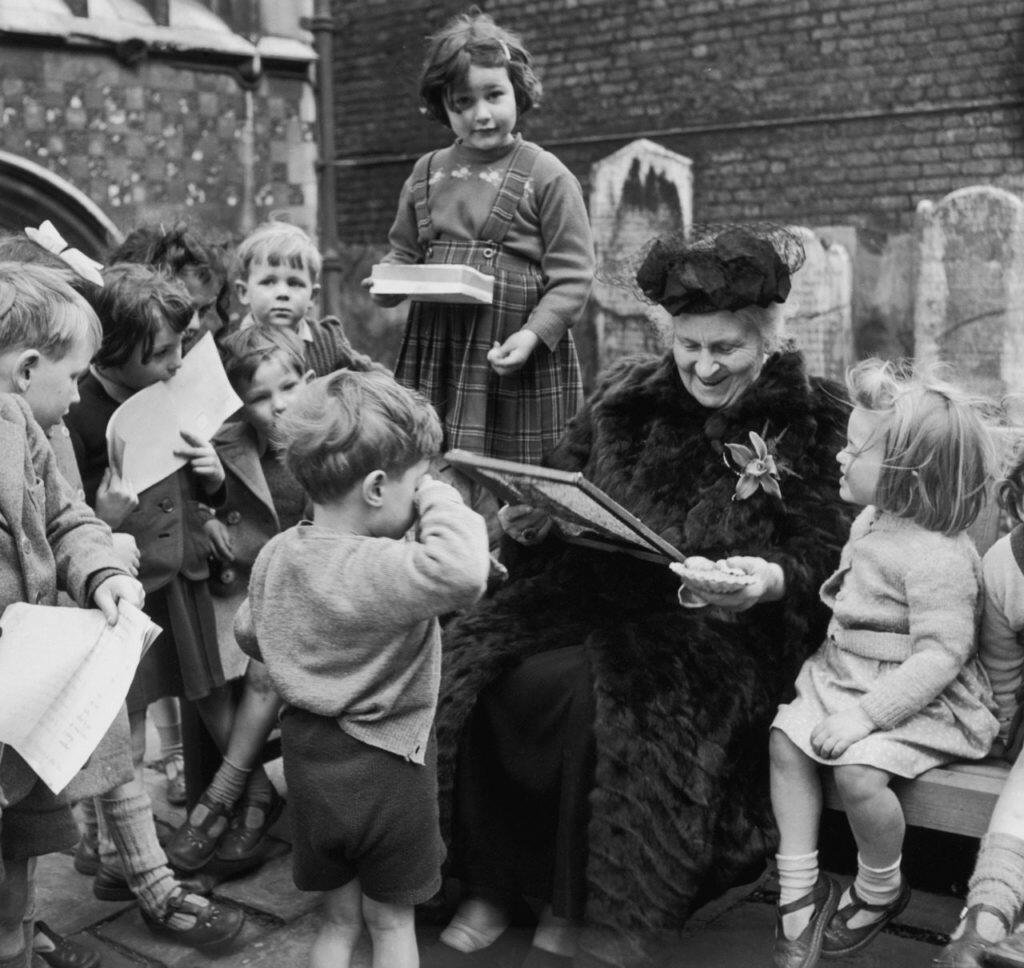
The Montessori Method
At Friends-Montessori School our educational philosophy, ideas of child development, & method of instruction are based primarily on the ideas, theories, and observations of Maria Montessori; known as the Montessori Method.
Maria Montessori (1870-1952) was an Italian physician who achieved world-wide recognition for her theories on child development & progressive education during the first half of the 20th century. Her work & legacy live on through the schools formed based on her ideas & observations.
Montessori education stands apart from other progressive education models through the use of precisely created didactic instructional materials, independent work cycles instead of class periods, the cosmic curriculum, carefully prepared classroom environments, specially trained teachers, “guides,” that help each child recognize & follow their own inner teacher, & much more.

Some Montessori Key Concepts
-
Auto-education, or self-directed learning, is a foundational principle of Montessori schools. In this educational approach, children are encouraged to take charge of their own learning through exploration and discovery. Montessori classrooms are designed to foster independence, with a range of hands-on learning materials accessible to students. These materials are often self-correcting, allowing children to learn from their mistakes without direct adult intervention. Teachers, or guides, observe and facilitate rather than direct, providing individualized support and introducing new concepts as students are ready. This method nurtures intrinsic motivation, critical thinking, and a lifelong love of learning, empowering students to become active participants in their own educational journey.
-
“In Montessori schools, multi-age groupings enable younger children to learn from older children and experience new challenges through observation. Older children reinforce their own learning by teaching concepts they have already mastered, while developing leadership skills and serving as role models. Because each student’s work is individual, children progress at their own pace; there is cooperation rather than competition between the ages. This arrangement mirrors the real world, in which individuals work and socialize with people of all ages and dispositions.
In a Montessori classroom, students work together in mixed-age groupings specific to the developmental stages for which Montessori education is based.”
from the American Montessori Society
-
“A properly credentialed Montessori teacher understands the importance of enabling children to develop naturally. The teacher observes children within a specific age range and introduces them to challenging and developmentally appropriate lessons and materials based on observations of each child’s unique interests, abilities, and social, emotional, cognitive, and physical development.
A trained Montessori teacher is well versed not only in Montessori theory and philosophy, but also in the accurate and appropriate use of Montessori materials. They have observational skills to guide and challenge their students, a firm foundation in human growth and development, and the leadership skills necessary for fostering a nurturing environment that physically and psychologically supports learning.”
from the American Montessori Society
-
In Montessori classrooms, the prepared environment plays a crucial role in facilitating learning and development. This carefully designed space is tailored to the needs and interests of the children, promoting independence, exploration, and discovery. Each area of the classroom is thoughtfully organized with age-appropriate materials that are accessible to the children, encouraging them to engage in self-directed activities. The layout supports freedom of movement and choice, allowing children to select their own tasks and work at their own pace. The prepared environment also includes elements that stimulate the senses and foster practical life skills, promoting order, concentration, and coordination. Through this thoughtfully structured setting, children are empowered to take initiative, solve problems, and develop a deep sense of responsibility and self-motivation.
-
“Montessori education supports children in choosing meaningful and challenging work that captures their interest, leading to engagement, intrinsic motivation, sustained attention, and a sense of responsibility to oneself and others. This child-directed work is supported by the design and flow of the Montessori classroom, which is created to ignite each child’s curiosity and to provide the opportunity to work in calm, uncluttered spaces either individually or with peers.
In a Montessori classroom, children are free to move around and explore—in fact, Dr. Maria Montessori, the founder of the movement more than a century ago, designed her classrooms with that in mind. Teachers guide children and keep them on the path to learning, and ensure that the classroom environment is respectful, orderly, and productive.”
from the American Montessori Society
The Montessori Method and Quaker Values: A Natural Partnership

At Friends-Montessori School, the Montessori Method and Quaker values work hand in hand to create a learning environment rooted in respect, reflection, and community. Both traditions emphasize the inherent worth of each individual, the importance of peaceful collaboration, and the belief that children are capable of deep learning and personal growth when given the space to explore, reflect, and engage meaningfully with the world around them.
Respect for the Inner Light
Quakers believe that every person carries an inner light—a source of wisdom, truth, and goodness. Similarly, Montessori education is built on respect for the child, honoring their natural curiosity, individuality, and ability to guide their own learning. In a Montessori classroom, children are trusted to make choices, explore their interests, and develop independence, mirroring the Quaker belief that each person has the capacity for insight and growth.
A Community-Centered Approach
Both Montessori and Quaker education foster strong, supportive communities where every voice matters. Just as Quaker meetings operate on equality and consensus, Montessori classrooms function as collaborative spaces where children engage in cooperative learning, resolve conflicts peacefully, and practice grace and courtesy. Through shared responsibilities—such as caring for the classroom environment or participating in Meeting for Business—students develop a sense of stewardship and responsibility to their community.
Silence, Reflection, and Inner Discipline
Quaker practice embraces silence as a tool for deep listening and self-discovery, a value that is seamlessly reinforced in a Montessori setting. Montessori students learn to focus, work independently, and develop inner discipline, gaining the ability to self-regulate and engage thoughtfully with the world. Our Meeting for Worship provides students with an opportunity to center down, reflect, and connect—reinforcing both the peacefulness of Quaker practice and the mindfulness of Montessori learning.
Peace, Justice, and Social Responsibility
Both traditions emphasize peace education and the importance of acting with integrity. In a Montessori classroom, conflict resolution is approached with respectful dialogue and empathy, preparing students to be thoughtful, compassionate problem-solvers. Similarly, Quaker values call for truth, equality, and justice, encouraging children to speak up for what is right and contribute to a more peaceful world.
By integrating Montessori methods with Quaker principles, Friends-Montessori School nurtures independent thinkers, compassionate leaders, and engaged citizens who are equipped with the tools to navigate life with wisdom, kindness, and purpose.

